Engineering · 6 min read
Invisible Technology: The Engineering Behind Minimalist Glazing
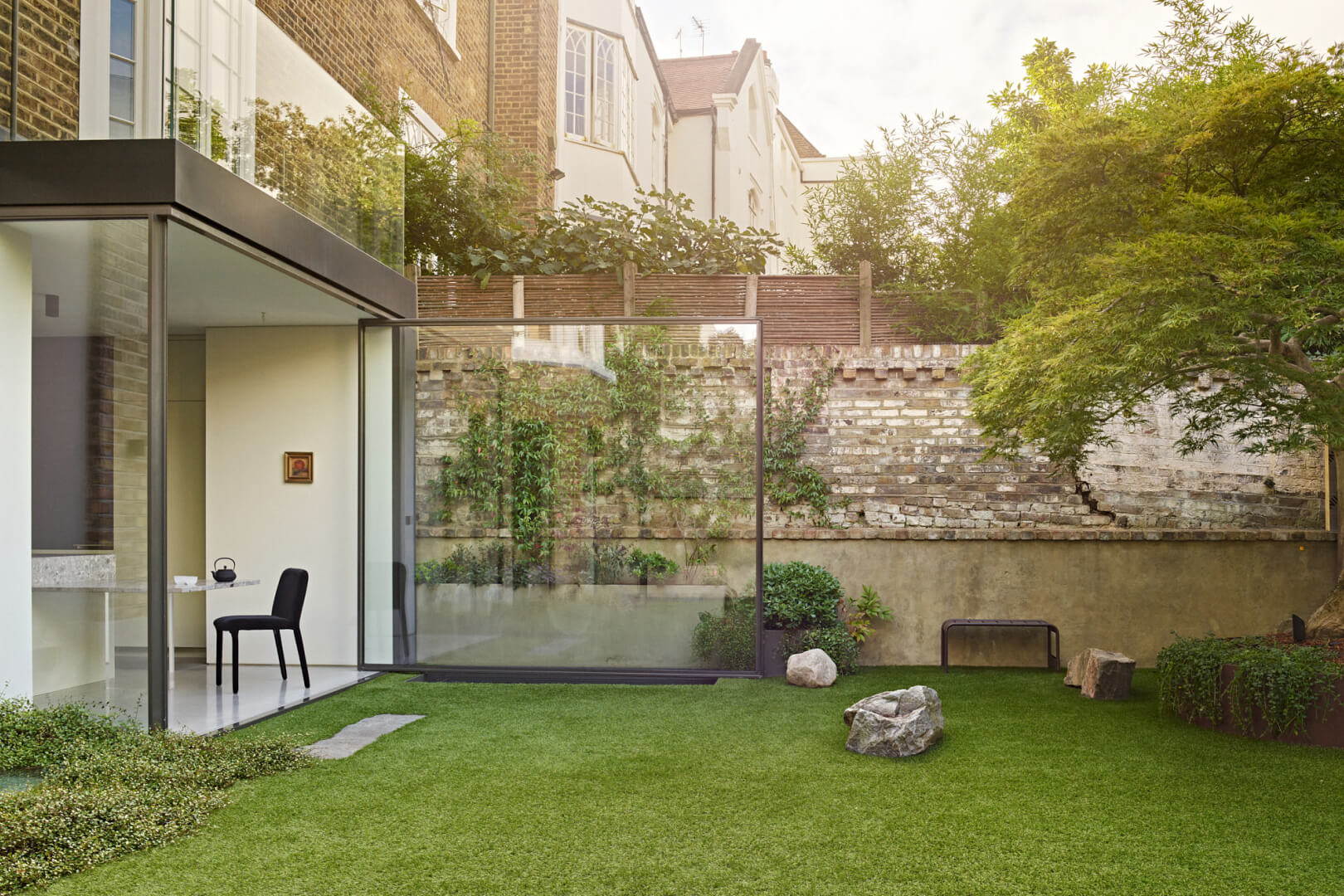
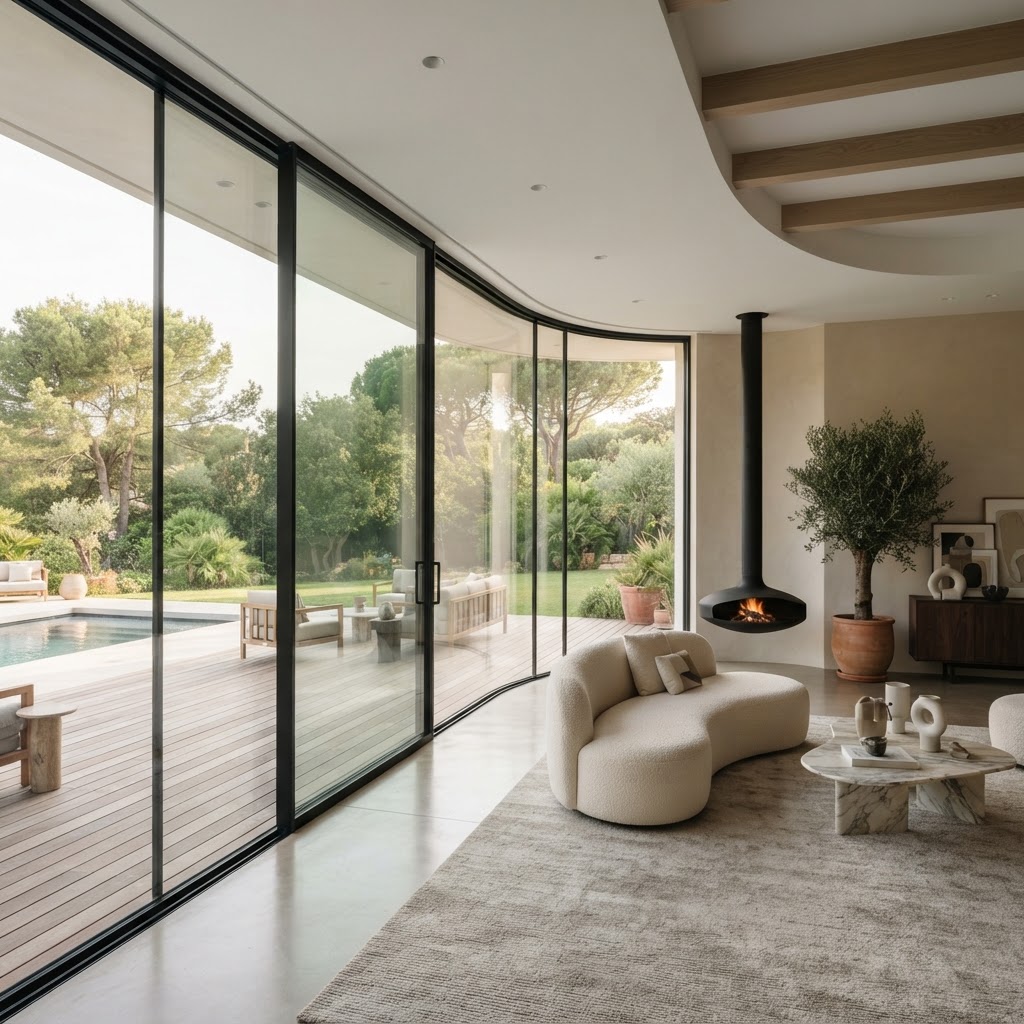
At first glance, a Vitrocsa system may appear to consist of just a few millimetres of aluminium, glass and a perfectly smooth movement. Yet behind this apparent simplicity lies a technology developed to meet particularly demanding architectural and technical requirements.
At first glance, a Vitrocsa system may appear to consist of just a few millimetres of aluminium, glass and a perfectly smooth movement. Yet behind this apparent simplicity lies a technology developed to meet particularly demanding architectural and technical requirements.
Making the profiles disappear does not mean making the technology disappear. Quite the opposite: the more discreet the system becomes, the more precisely every component must be designed, manufactured and assembled.
A range adapted to every configuration
Behind every opening lies a specific technical configuration.
For example, the Vitrocsa Sliding system is available in several ranges to meet different architectural and climatic requirements: V56 for high-performance applications, TH+ for large surfaces requiring enhanced thermal insulation, V32 with slimmer profiles for moderate climates, and 3001, particularly suited to warm climates.
The choice of range depends on factors including panel dimensions, weight, required performance and the specific constraints of each project.
This adaptability allows us to maintain the same principle: minimising the visible presence of the system without compromising its performance.
The precision of micromechanics
The visible slimness of Vitrocsa systems relies on a level of precision that itself remains unseen.
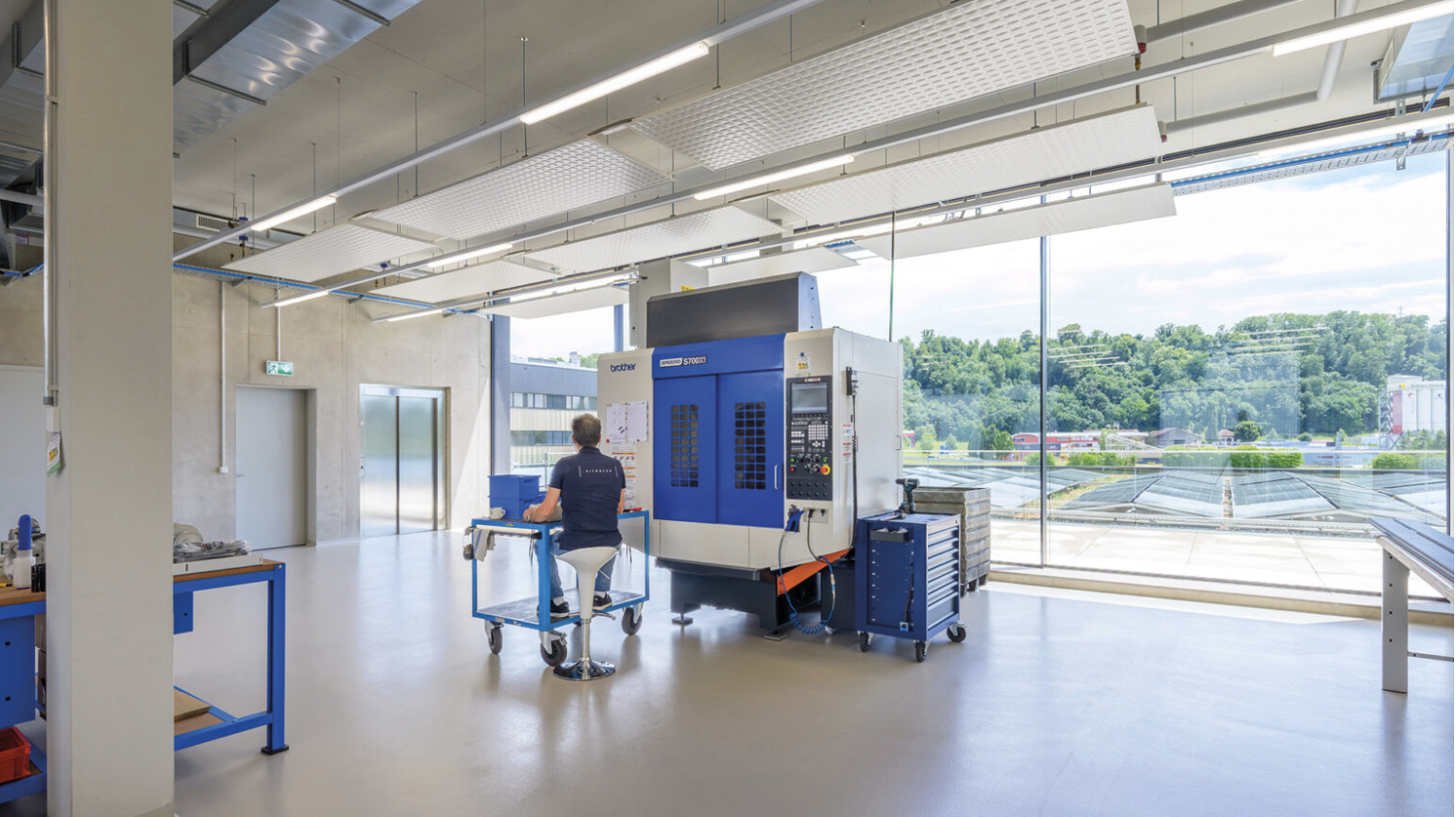
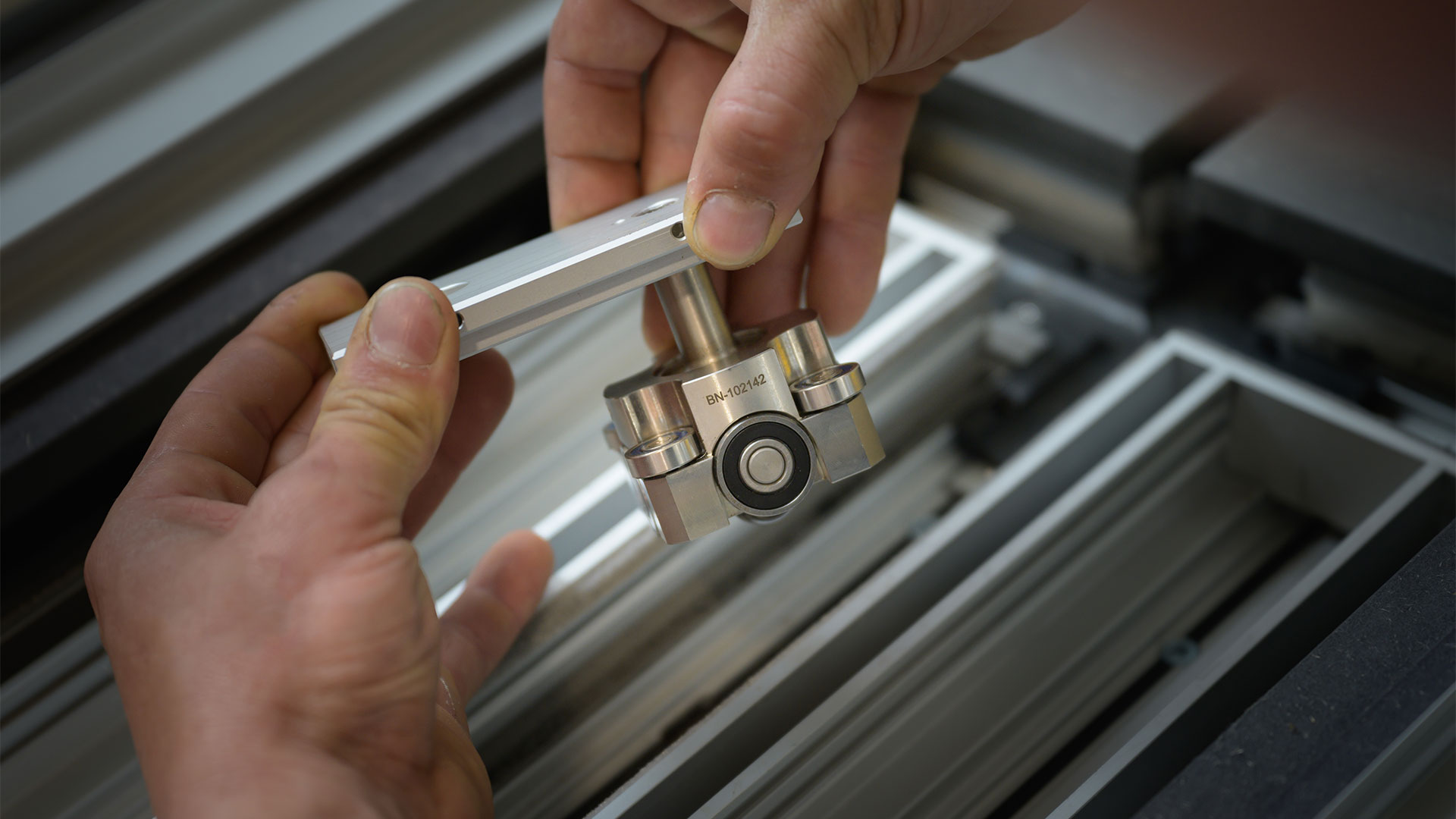
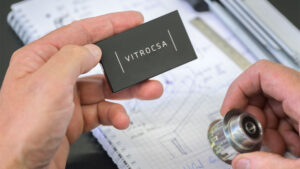
More than one thousand components are produced for our systems using an approach comparable to high-precision micromechanics and fine watchmaking.
Each component is custom-designed and manufactured, then individually refined before being assembled using precision engineering.
It is this mastery of small-scale components that makes it possible to control elements of considerable size and weight.
The larger the glazing, the more critical every mechanical detail becomes.
Managing water without interrupting the architecture
Watertightness is another example of technology that must perform without drawing attention to itself.
In Vitrocsa systems, frame drainage is vertical. Rainwater is collected in a drainage chamber equipped with a foam element designed, among other functions, to reduce wind pressure.
The same chamber incorporates PVC support elements that transfer the glazing loads, including its own weight, into the structure.
A complex mechanism, entirely designed to remain discreet once integrated into the architecture.
Motorising the invisible
As dimensions and weights increase, motorisation adds another dimension to the use of Vitrocsa systems.
We have developed our own motorisation system for the Sliding, Curved, Invisible Frame and Guillotine solutions, notably within the TH+ range.
In keeping with our philosophy, the motorisation is fully integrated into the system. It is concealed in the upper part of the frame, within a space just 12 cm high, minimising its impact on the architecture.
The system can move up to 1,600 kg per motor, with a maximum driving force of 180 N and a maximum speed of 167 mm/s. The speed automatically adapts when engaging a second panel to ensure controlled movement.
Automatic electric closing can be integrated with various control and home automation systems, including keypads, push buttons, badge readers and other compatible devices.
Safety is also part of this invisible engineering: when an obstacle is detected, the system automatically stops.
Extreme loads, controlled movement
Invisible technology becomes particularly important when dimensions reach exceptional scales.
With our Guillotine systems, each panel can weigh between 500 and 1,000 kg, depending on the range and project configuration.
To enable such substantial movement, each panel is equipped with an integrated counterweight system. Motorisation can also be added to facilitate and automate operation.
The result is a paradox: a mass weighing up to one tonne moves with remarkable fluidity, while the mechanics that make this movement possible almost completely disappear from view.
Technology designed to disappear
This pursuit of discretion does not stop at product design.
Our partners are trained to install Vitrocsa systems, ensuring that the precision achieved in the workshop is maintained on site. Each partner follows projects from the design stage and supports architects in identifying the most appropriate range and configuration for each project.
Because a minimalist system can only truly disappear when every stage, from design to installation, is mastered.
When complexity becomes simplicity
Perhaps this is the ultimate paradox of minimalist glazing.
The more advanced the technology, the less visible it should be.
Bearings, rails, drainage, counterweights, motorisation and micromechanics all work together to create an experience that seems effortless: large glazing that opens smoothly and disappears into the architecture.
At Vitrocsa, we do not seek to hide technology. We develop it so that it can disappear.
Because behind every visible millimetre lies technology that should almost never be noticed.
Interested in Vitrocsa?
Request a Quote